I thought I would write a Blog about my visits to the UK's Overseas Territory of the Falkland Islands but when I looked at the number of images I had from the somewhat draughty(!) location, I realised that there were  too many for just one Blog.

So here is part one.  Others will follow in a few days time.

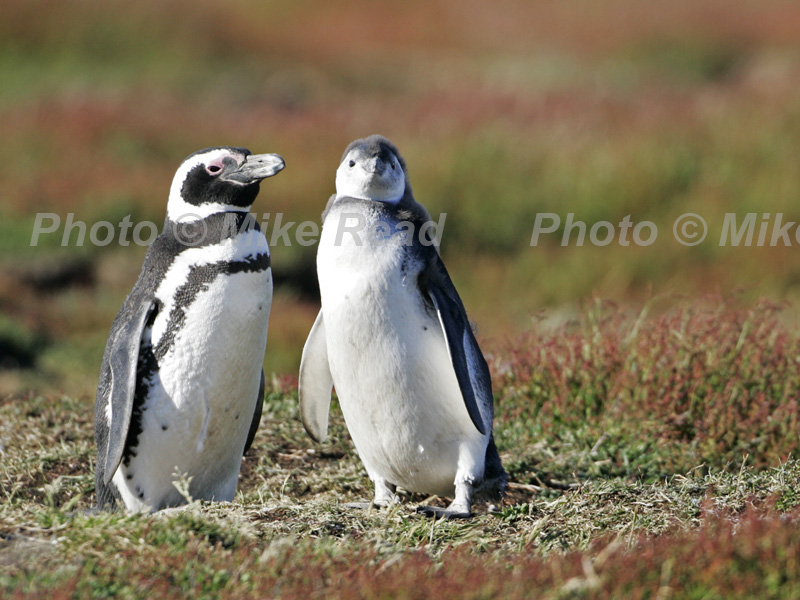
Magellanic penguin Spheniscus magellanicus pair at sunrise Sea Lion Island Falkland Islands
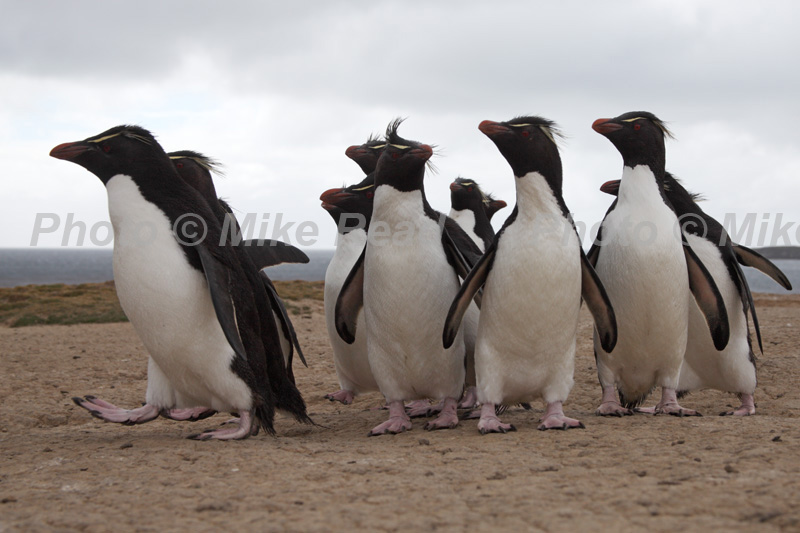
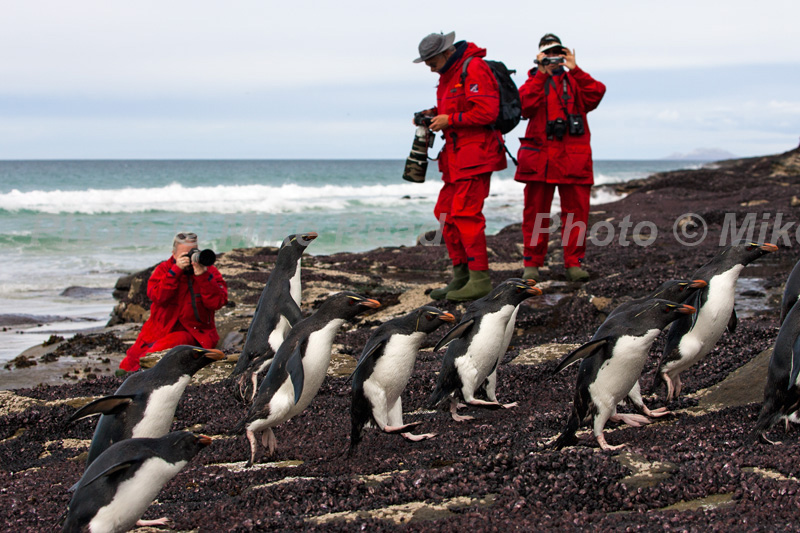
Rockhopper penguin Eudyptes chrysocome walking towards their breeding colony Falkland Islands
02AD3143-Rockhopper-penguins

.Rockhoppers are the smallest of the penguins found regularly in the Falkland Islands. In the photos to the left and right, I lay down by their regular route from the top of the cliffs to their nesting colony and they took very little notice of me.  That is one of the joys of photographing in the Falklands, much of the wildlife is very approachable.
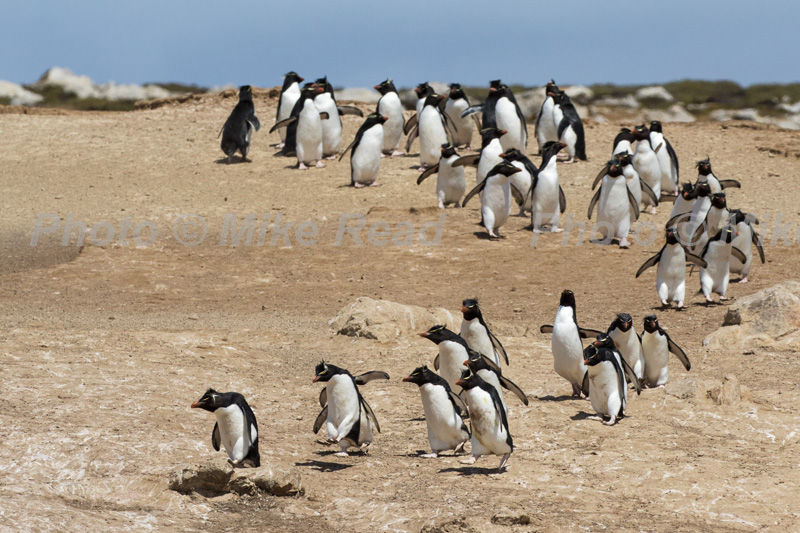
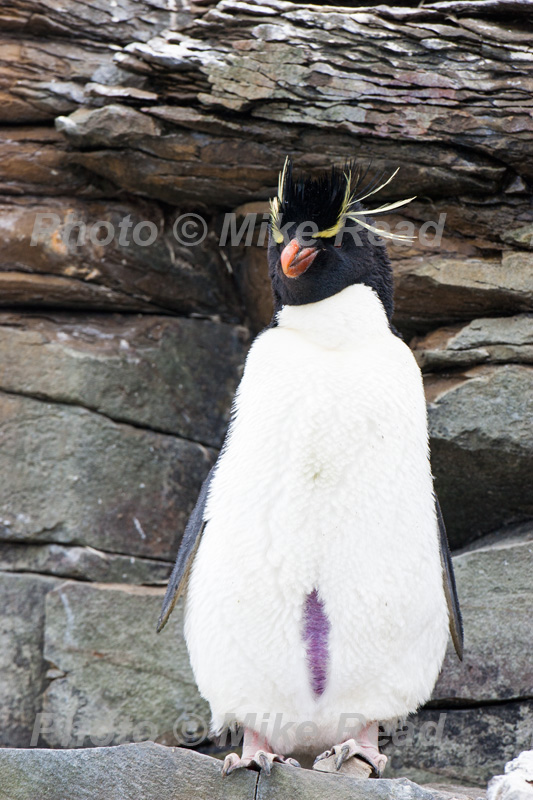
Rockhopper penguin Eudyptes chrysocome adults going to and from nesting colony, Pebble Island, Falkland Islands, British Overseas Territory, UK
03AD1205-Rockhopper-penguin-approaching-nesting-colony
Rockhopper penguin Eudyptes chrysocome showing brood patch Sea Lion Island Falkland Islands
02AD8150-Rockhopper-penguin-showing-brood-patch
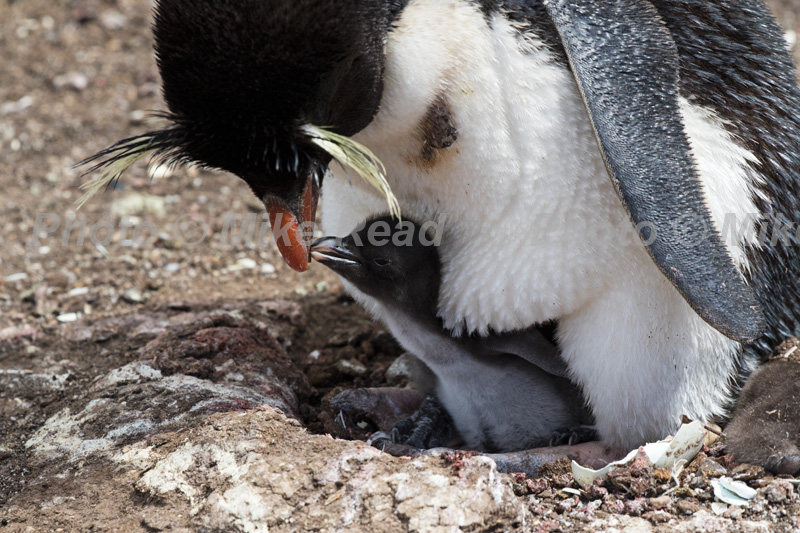
Rockhopper penguin Eudyptes chrysocome adult feeding young chick on nest Pebble Island Falkland Islands British Overseas Territory
03AD1166-Rockhopper-penguin-feeding-recently-hatched-chick
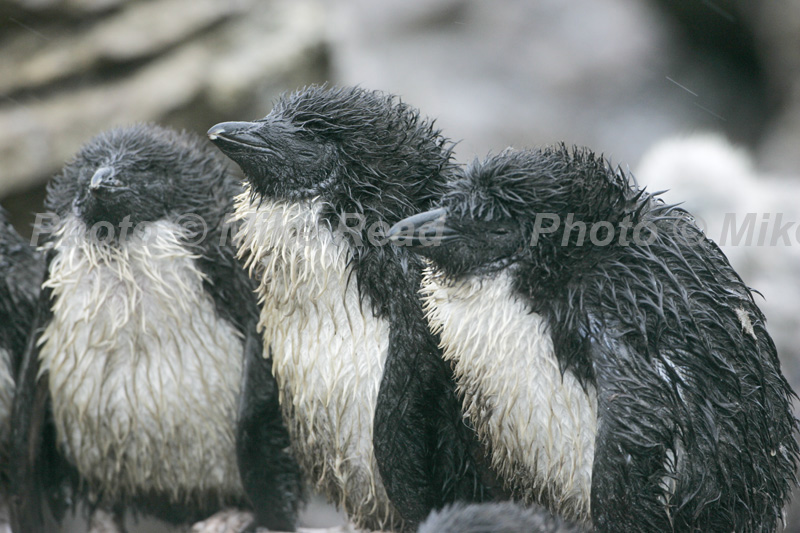
Rockhopper penguin Eudyptes chrysocome three very wet chicks in the rain Falkland Islands
02AD3152-Rockhopper-penguin-three-wet-chicks
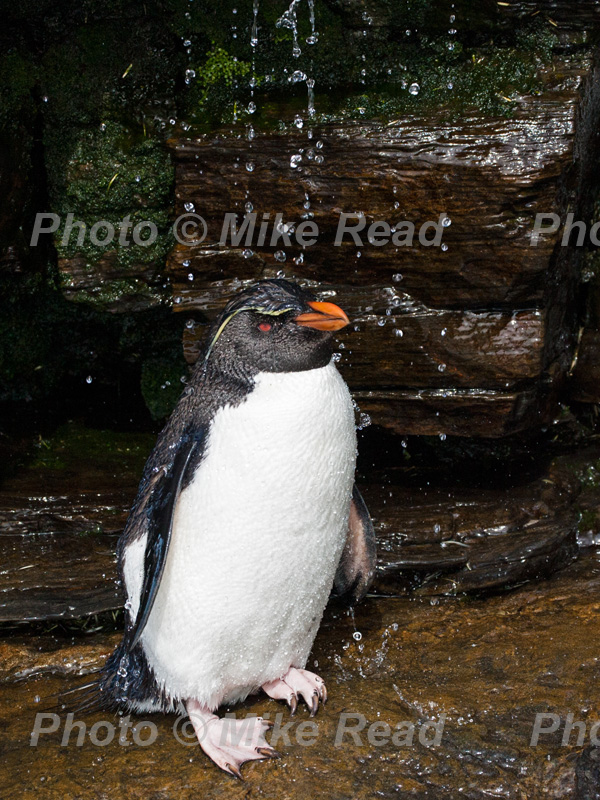
Rockhopper penguin Eudyptes chrysocome showering in small waterfall to wash salt from its feathers Saunders Island Falkland Islands
02AD8096-Rockhopper-penguin-showering

The above  four images show that penguins do develop a brood patch (left), one taking a freshwater 'shower' to wash the salt from its feathers before taking over incubation or brooding duties (right), one about to feed a recently hatched chick (centre top) and three older chicks huddled together to keep warm during heavy rain (centre bottom).  I guess this is when I should warn any impending visitors to the Falklands about the normal weather conditions there!  During my four visits, it became obvious that the wind was strong, cool to cold and there was only one day that I can remember being anything like calm.  Layers of clothing are best with perhaps a full set of waterproofs to keep the cold wind out!  How some of the smaller bird species survive there is quite beyond me.
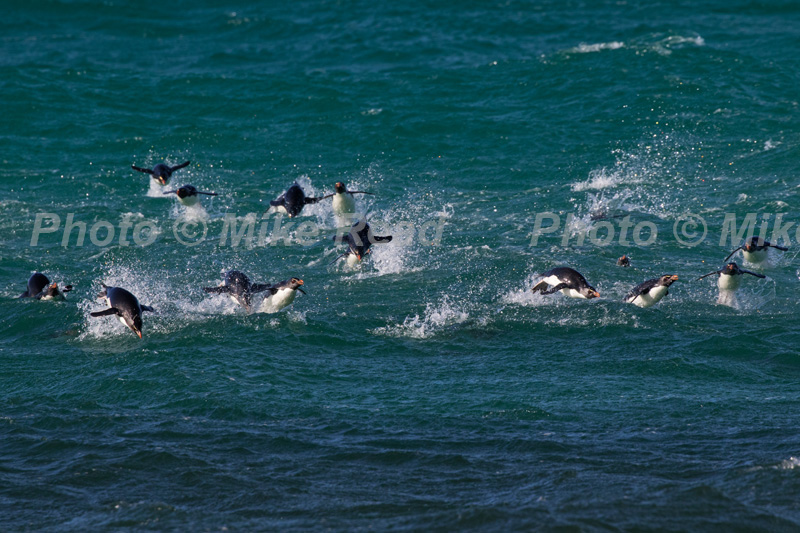
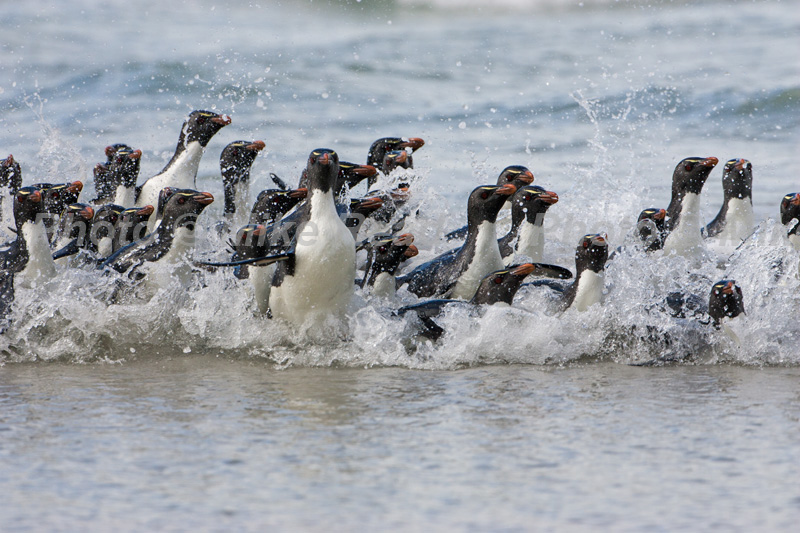
Rockhopper penguin Eudyptes chrysocome group porpoising in the sea towards Saunders Island, Falkland Islands, British Overseas Territory, UK
03AD1169-Rockhopper-penguins-porpoising-through-the-sea
Rockhopper penguin Eudyptes chrysocome group returning to shore and the breeding colony after feeding Saunders Island Falkland Islands
02AD8121-Rockhopper-penguin-group-rushing-ashore
Rockhopper penguin Eudyptes chrysocome and wildlife photographers Saunders Island Falkland Islands
02AD8130-Rockhopper-penguins-and-photographers
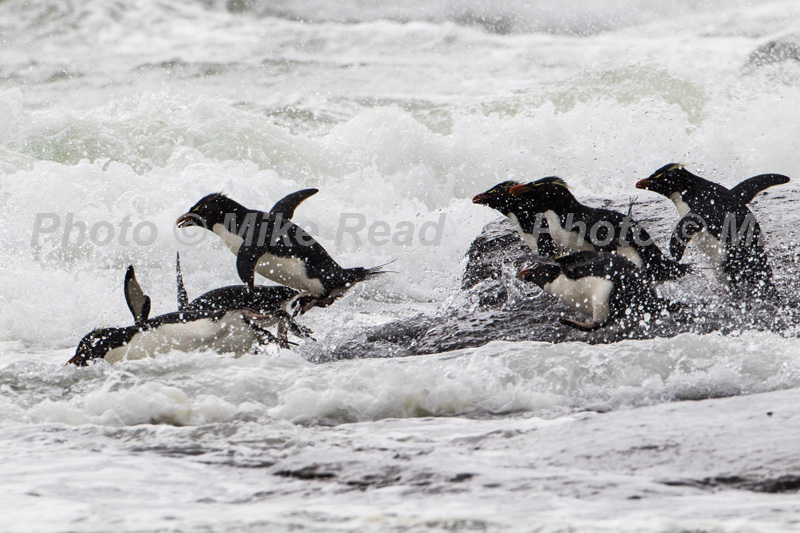
Rockhopper penguin Eudyptes chryscome group crashing through waves The Neck Saunders Island Falkland Islands November 2015
02AD9381-Rockhopper-penguins-jumping-into-the-surf

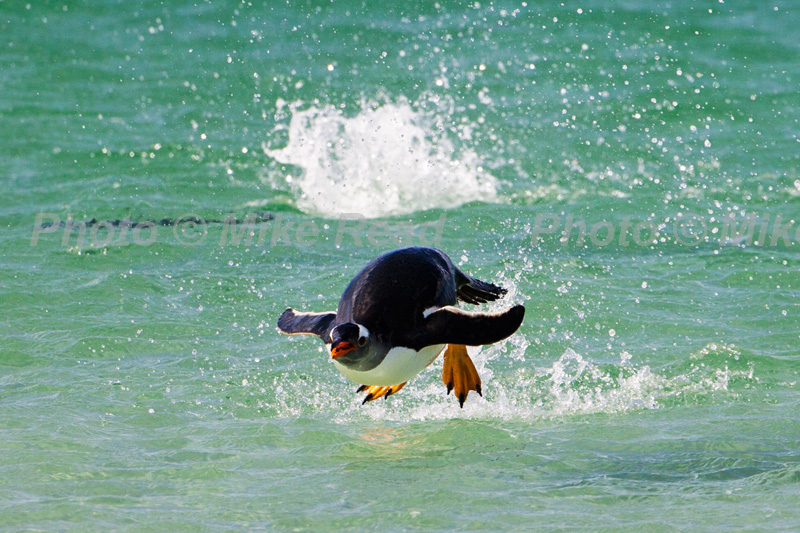
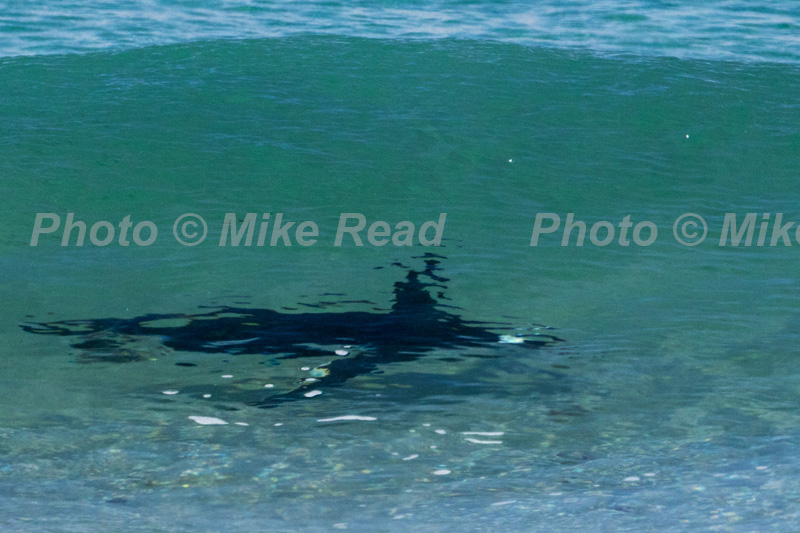
.When they return from a feeding trip, on most occasions, large gatherings will assemble on the sea at 400 or more yards offshore and then suddenly 20 or so birds will risk the run to shore.  Predators like sealions, elephant seals or even orcas may be lying in the shallows where they have the greatest chance of catching a penguin of any species as a meal.  Consequently this becomes a mad dash for the penguins who porpoise as quickly as they can and they leap out of the water at high speed.  It is therefore in the interests of the penguins that photographers etc should not stand too close to their landing or departure point as the penguins, approachable as they usually are, may become a little nervous, get delayed for a moment and be captured when they would not normally be.
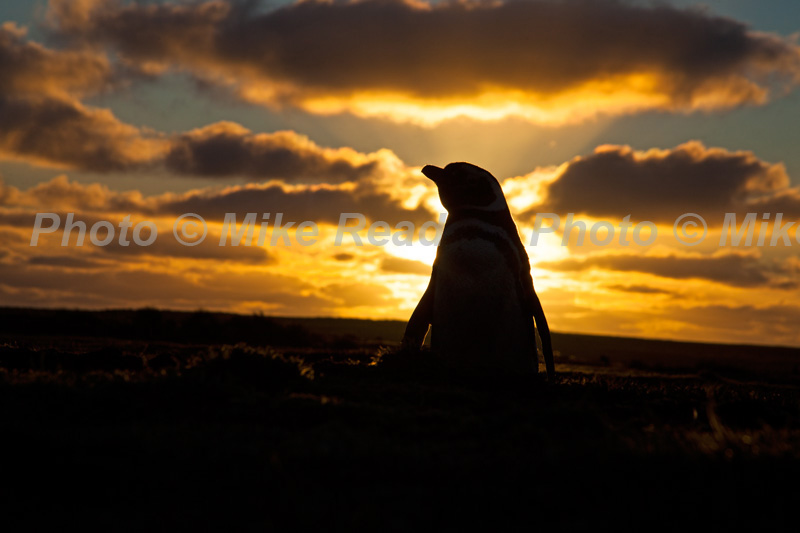
Magellanic penguin Spheniscus magellanicus silhouetted at sunset Sea Lion Island Falkland Islands
02AD8064-Magellanic-penguin-at-sunset

Sometimes it is worth being late for an evening meal to get a sunset picture of something like this Magellanic penguin surrounded by beautiful orange and yellow-lit clouds (above).  To the right is a Magellanic penguin calling.  They sound very much like a braying donkey.
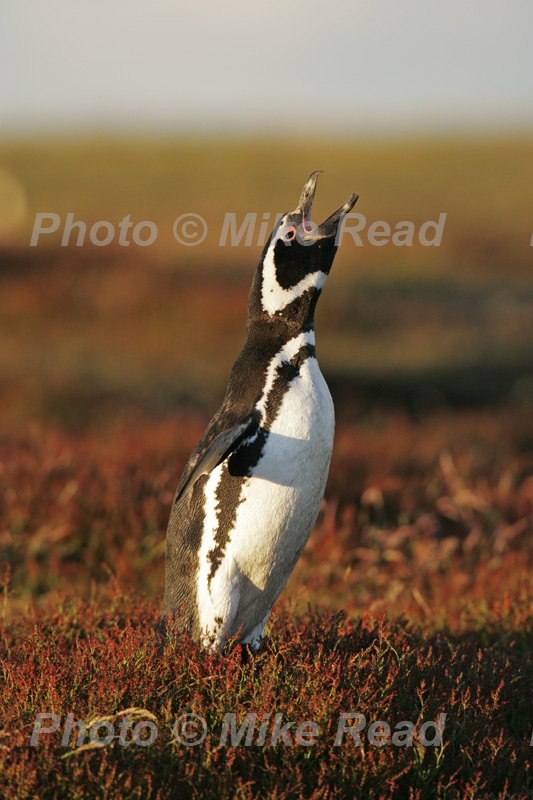
Magellanic penguin Spheniscus magellanicus calling (sounds like a braying donkey) Falkland Islands
02AD2914-Magellanic-penguin-calling
Magellanic penguin Spheniscus magellanicus adult and large chick by nest burrow Sealion Island Falkland Islands

Magellanics are the only Falkland  penguins to breed in burrows.  Small chicks will stay hidden under ground but when they grow much larger, they can be seen next to the burrow waiting to be fed.  Quite often when the young reach this stage, a parent bird will be on watch to warn the inexperienced youngster of danger.
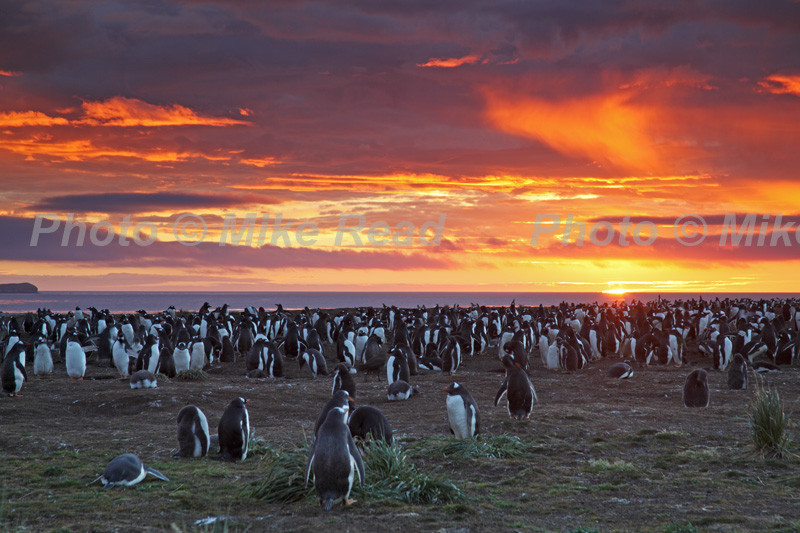
Gentoo penguin Pygoscelis papua nesting colony at sunrise Sea Lion Island Falkland Islands

Above is one of the very first images I took in the Falklands.  Because of ice and snow on the runway at RAF Brize Norton, we took off three days late and shortly after we touched down at Mount Pleasant, we were whisked away on a Falkland Islands Government Air Services (FIGAS) flight to Sealion Island and the World's most southerly wildlife watching accommodation. After a welcome evening meal we all retired to get some sleep.  Fortunately I had prepared my photographic gear in the evening because early the next morning and very bleary-eyed, I opened the curtains a little and saw this scene.  Within five minutes I was outside near the Gentoo colony clicking away at the beautiful scene.
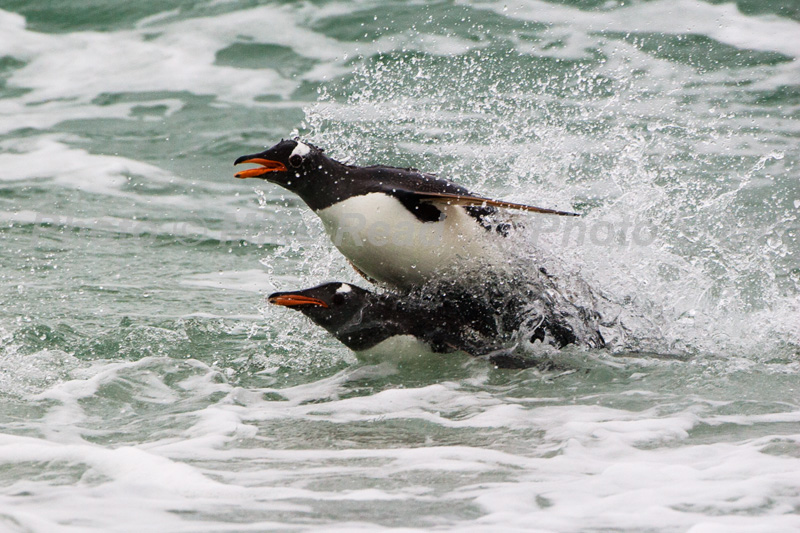
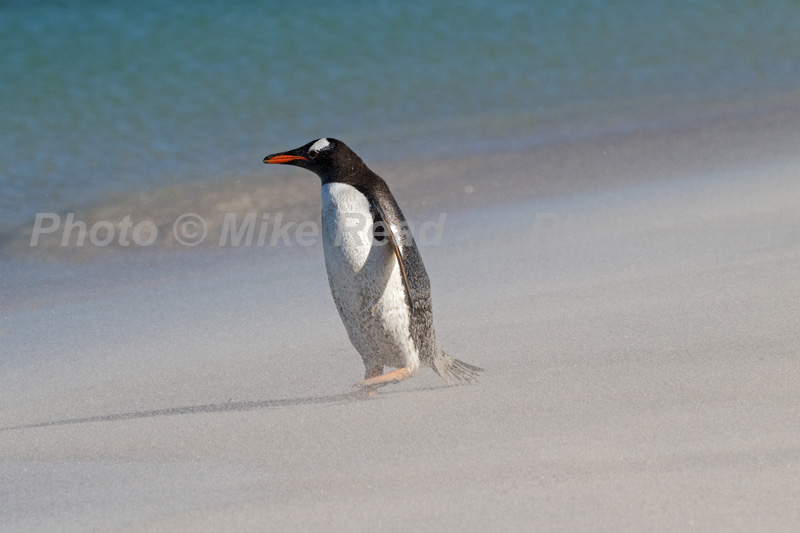
Gentoo penguin Pygoscelis papua rushing out of the sea to avoid predators Volunteer Point East Falkland Falkland Islands
02AD8163-Gentoo-penguin-two-porpoising-towards-the-shore
Gentoo penguin Pygoscelis papua porpoising through the sea to avoid predators as it approaches land Bleaker Island Falkland Islands
02AD8183-Gentoo-penguin-porpoising-to-approach-land-quickly
Gentoo penguin Pygoscelis papua approaching the shore Bleaker Island Falkland Islands November 2015
02AD9350-Gentoo-penguin-swimming-in-wave
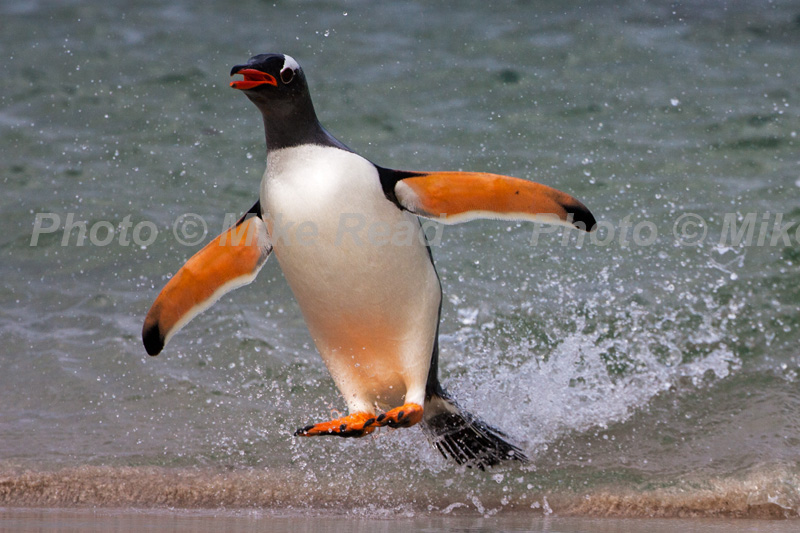
Gentoo penguin Pygoscelis papua jumping out of sea to avoid predators Bleaker Island Falkland Islands
02AD8204-Gentoo-penguin-jumping-from-sea
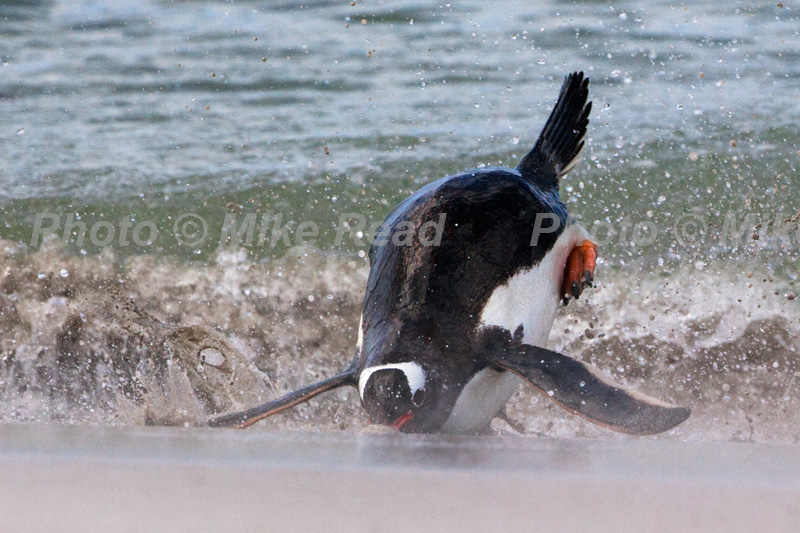
Gentoo penguin Pygoscelis papua adult landing beak first after returning from feeding foray Blaker Island Falkland Islands
02AD8196-Gentoo-penguin-nose-dives-in-sand
Gentoo penguin Pygoscelis papua in wind blown sand on a beach Bleaker Island Falkland Islands British Overseas Territory UK
03AD1038-Gentoo-penguin-in-sand-storm

The first five of the above six images all show Gentoo penguins coming ashore to then walk up on to Bleaker Island (where I took groups on three tours).  In the first two pictures birds are once again porpoising towards a beautiful sandy beach.  The third image shows a penguin dashing along in a small wave which is about to break onto the beach.  At the last moment the bird then turns towards the land and leaps.  Unfortunately they don't always land on their feet.The final picture showa a bird about to head back into the sea on a typically windy day with something akin to a sand storm blowing by.  This is not unusual weather!
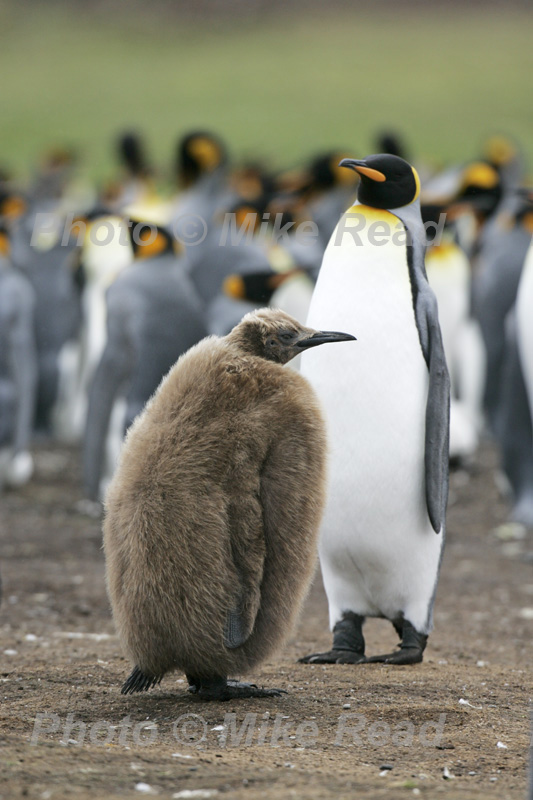
King penguin Aptenodytes patagonicus one-year old juvenile and adult in breeding colony Volunteer Point Falkland Islands
02AD2989-King-penguin-adult-and-well-grown-young
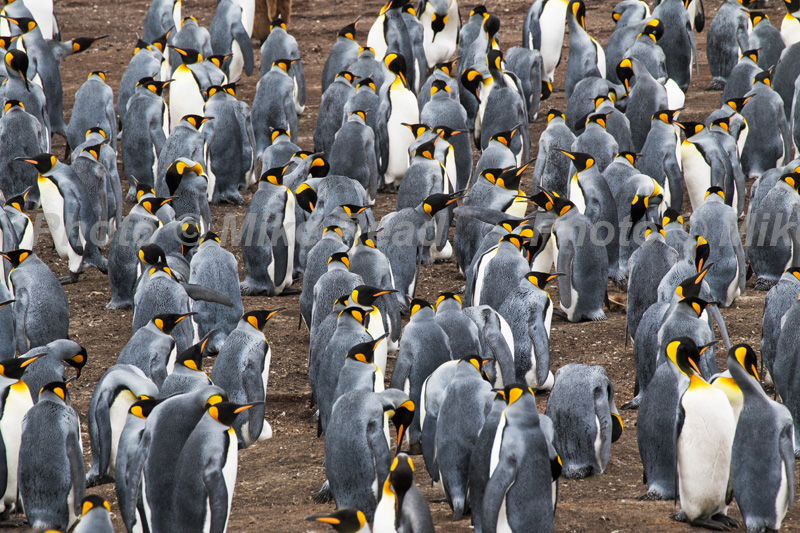
King penguin Aptenodytes patagonicus adults at breeding colony Volunteer Point Falkland Islands November 2015
02AD9298-King-penguin-part-of colony

Volunteer Point is one of the World's most accessible King penguin colonys where it is possible to see a wide range of activities and plumage variations.  The youngster (left) is close to a year old and during the southern winter it will receive occasional feeding visits from its parents. The picture above shows a part of the colony while the image (right) shows a pair bonding display. Males it seems, are larger than females.
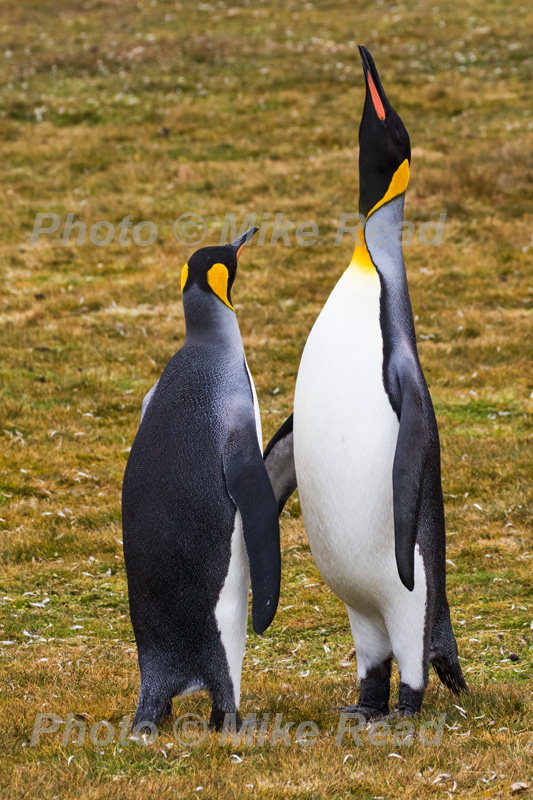
King penguin Aptenodytes patagonicus two adults one sky pointing near breeding colony Volunteer Point Falkland Islands November 2015
02AD9293-King-penguin-pair-with-displaying-male
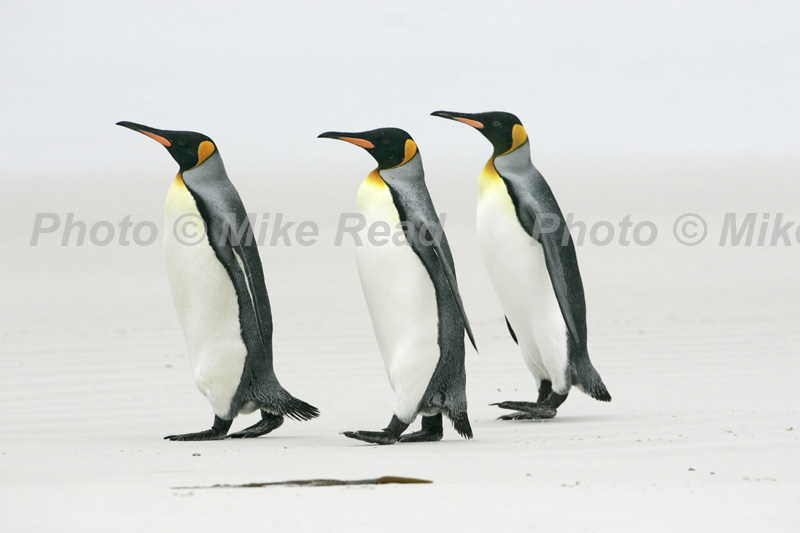
King penguin Aptenodytes patagonicus group of three on beach Volunteer Point Falkland Islands
02AD3051-King-penguin-three-walking-on-beach

I saw this group of three King penguins walking along the shore and I was thinking 'we three kings - Christmas card' but then they all turned to face the cold sea and for a brief moment they were together like the image to the right.  To me they seem to be saying 'look, if we all hold hands, we can run into the sea together!  No backing out now.'
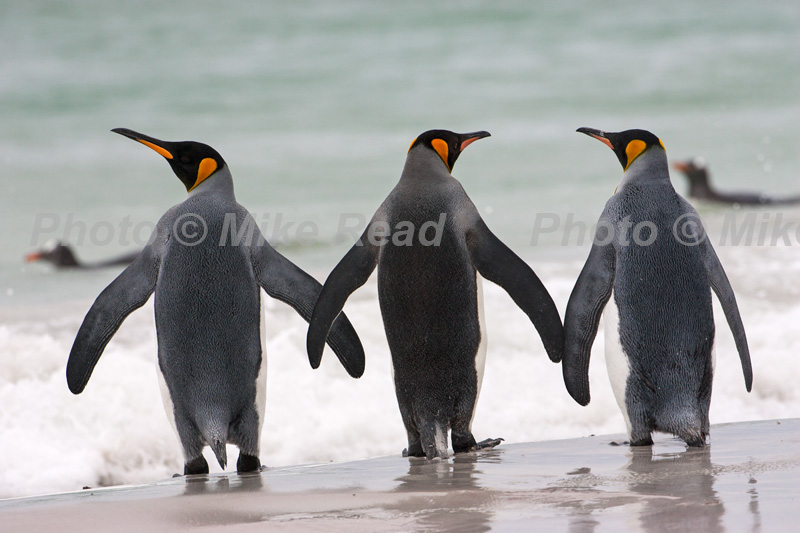
King penguin Aptenodytes patagonicus adults about to go out to feed Volunteer Point East Falkland Falkland Islands
02AD8016-King-penguin-trio
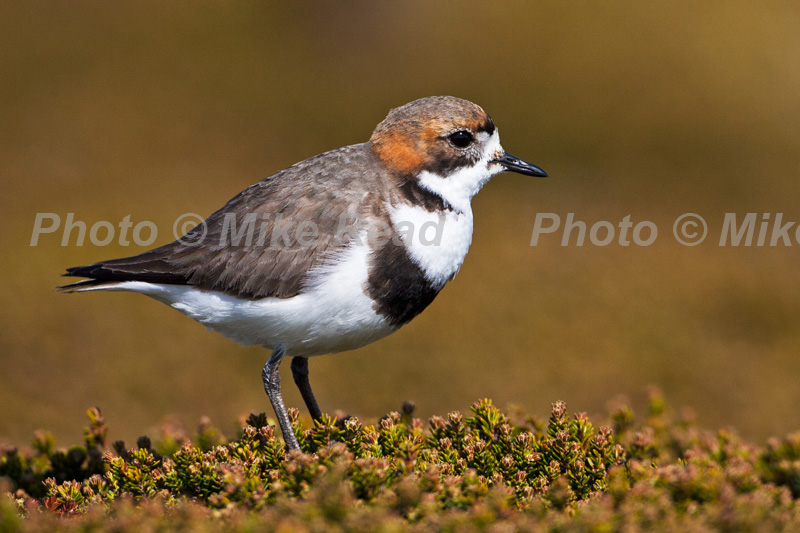
Two-banded plover Charadrius falklandicus perched on Diddle-dee Empetrum rubrum Saunders Island Falkland Islands
02AD8487-Two-banded-plover
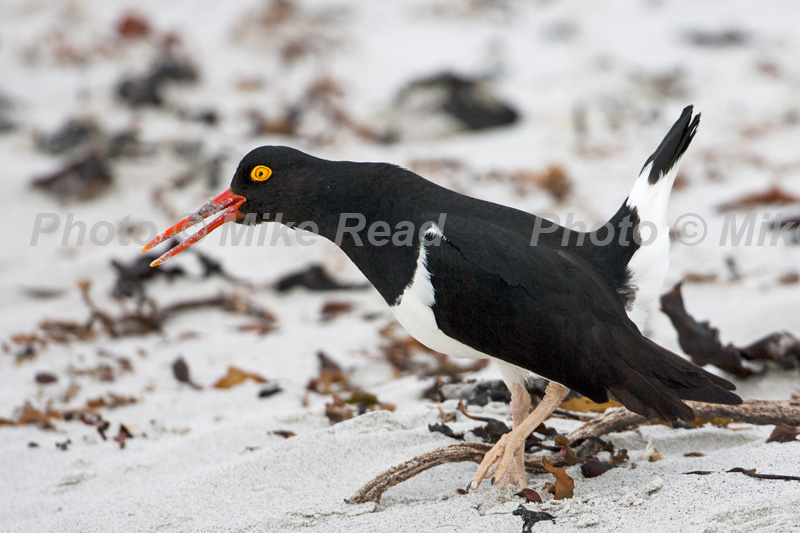
Magellanic oystercatcher Haematopus leucopodus adult on beach calling and displaying Sea Lion Island Falkland Islands
02AD8460-Magellanic-oystercatcher-calling
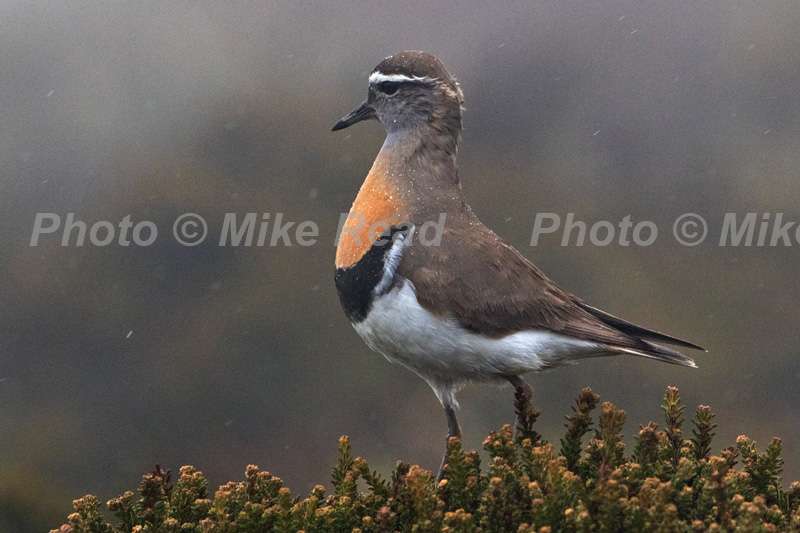
Rufous-chested dotterel Charadrius modestus perched on Diddle-dee Empetrum rubrum in rain and mist Saunders Island Falkland Islands UK November 2015
02AD9614-Rufous-chested-dotterel-OR-plover
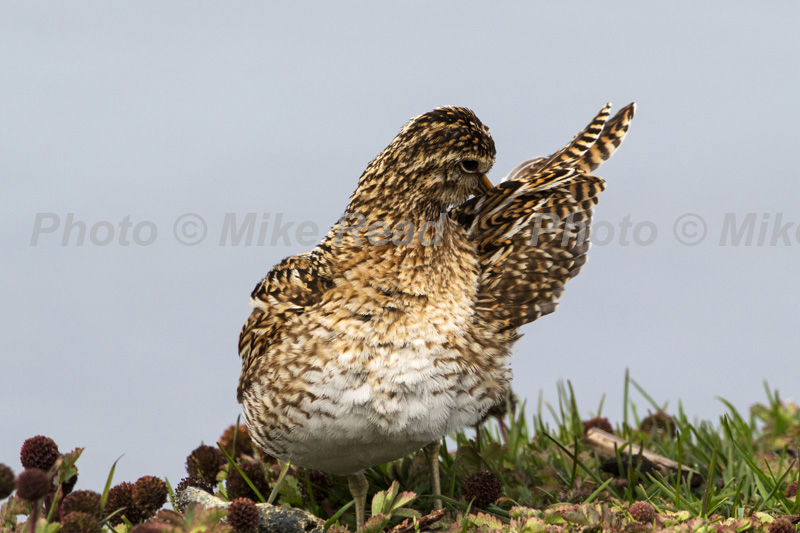
South American snipe Gallinago paraguaiae preening amongst Prickly bur Acaena magellanica Sea Lion Island Falkland Islands UK November 2015
02AD9613-Magellanic-snipe-preening

Here are 5 of the wader OR shorebirds you can see in the Falklands.  Clockwise from the left we have Magellanic snipe, Two-banded plover, Magellanic oystercatcher, Rufous chested plover (AKA Rufous chested dotterel) and White-rumped sandpiper.  The latter species breeds in North America and migrates south to spend the northern winter in places like the Falklands and parts of South America.
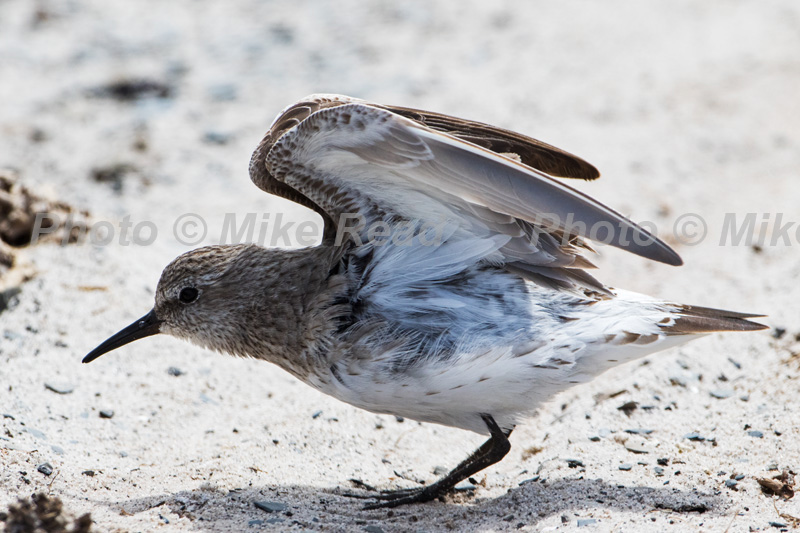
White-rumped sandpiper Calidris fuscicollis wing stretching on a beach Sea Lion Island Falkland Islands UK November 2015
02AD9635-White-rumped-sandpiper-wing-stretching
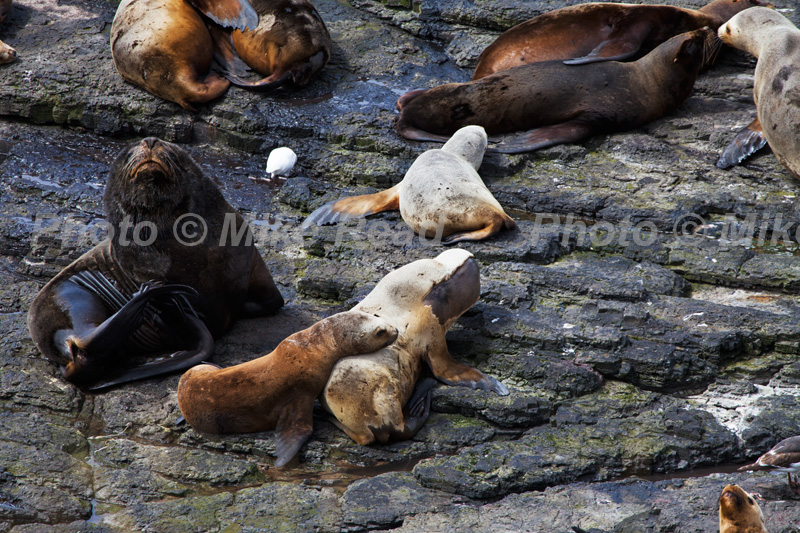
South American sea lion Otaria flavescens group resting on rocks Bleaker Island Falkland Islands November 2015
01DD3739-South-American-sea-lion-male-and-females
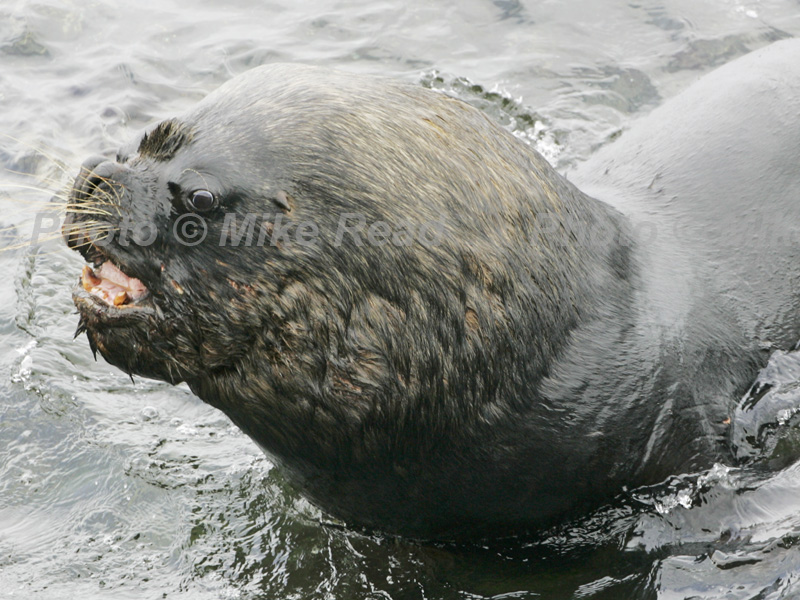
South American sea lion Otaria flavescens male in shallow sea Falkland Islands
01DD2230-South-American-sea-lion-male
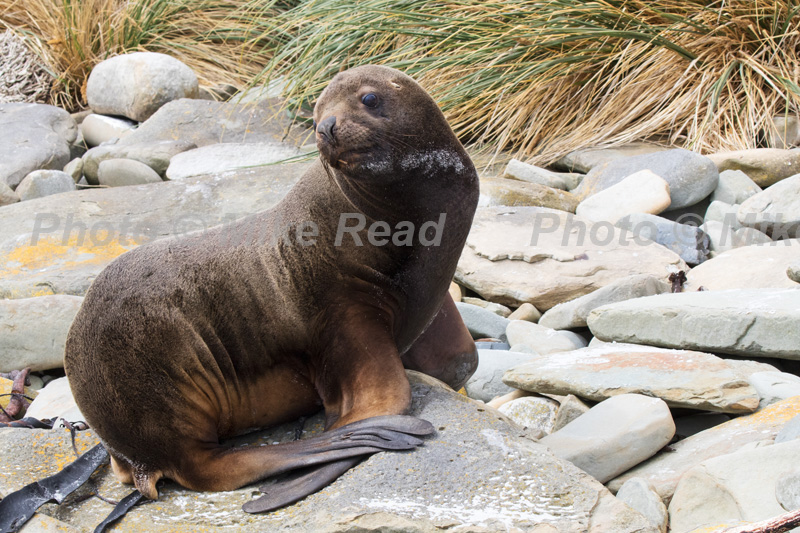
Southern sea lion Otaria flavescens female on a beach amongst rocks with Tussac grass Poa flabellata beyond Sealion Island Falkland Islands British Overseas Territory December 2016
01DD4009-Southern-sea-lion-female
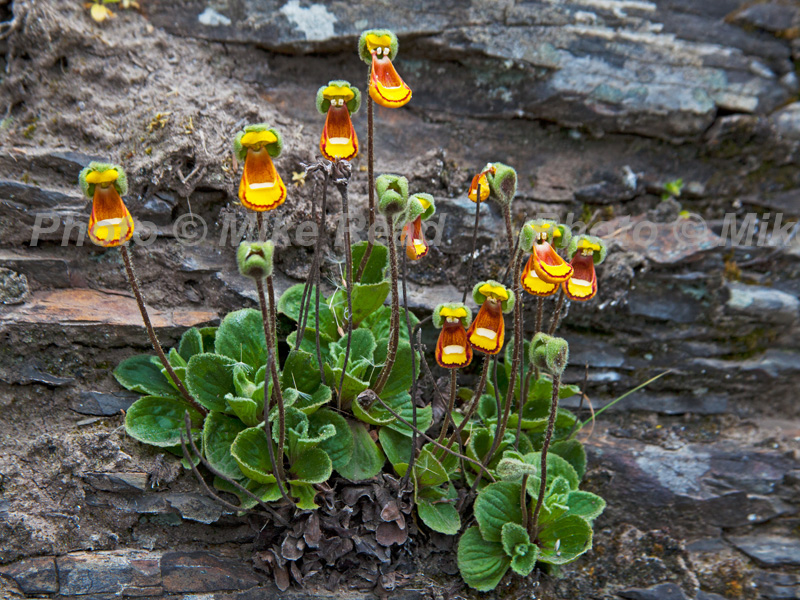
Lady's slipper Calcoelaria fothergillii growing in rock crevice Saunders Island Falkland Islands
01BD3482-Ladys-slipper
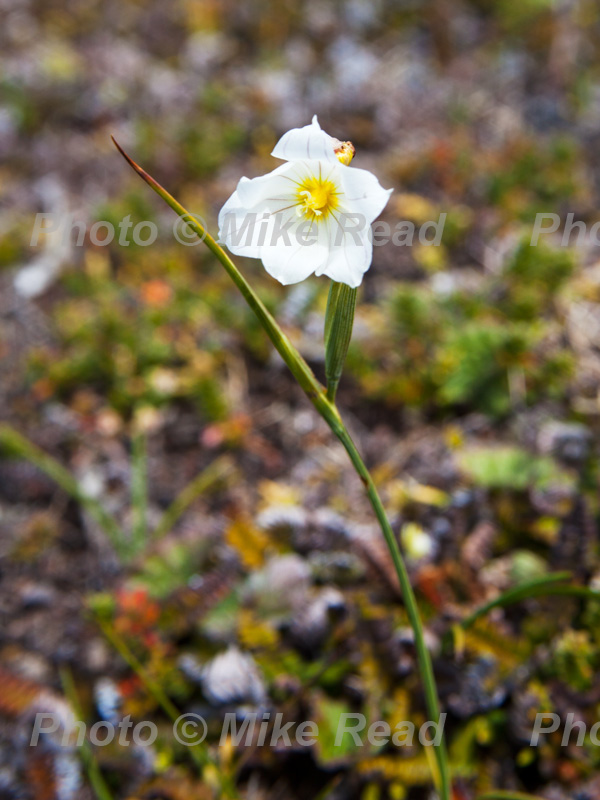
Pale maiden Olsynium filifolium national flower of the Falklands, Saunders Island, Falkland Islands, UK
01BD3478-Pale-maiden-Olsynium-filifolium
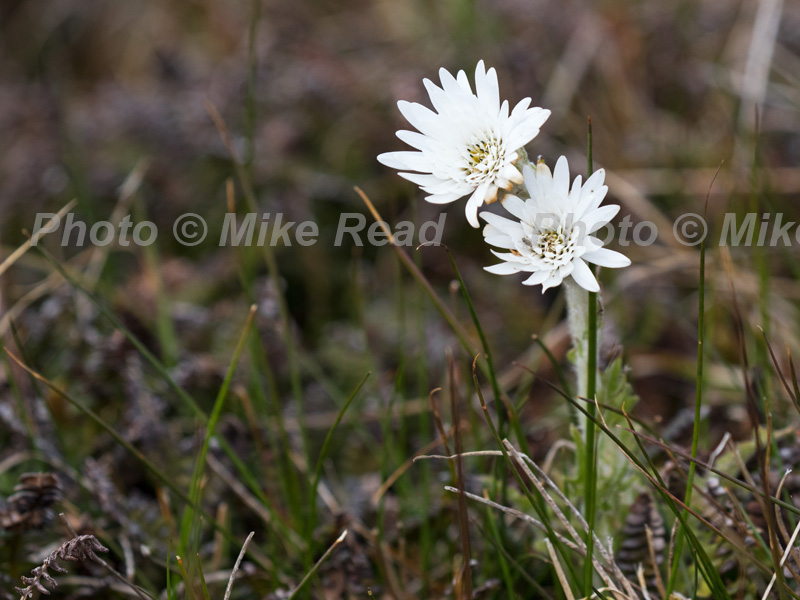
Vanilla daisy Leucheria suaveolens Sealion Island Falkland Islands British Overseas Territory December 2016