02AD7875 Black-browed albatross Thalassarche melanophrys in flight over the sea Saunders Island Falkland Islands
Black-browed albatross Thalassarche melanophrys preparing to take off Saunders Island Falkland Islands
02AD7914-Black-browed-albatross-about-to-take-off

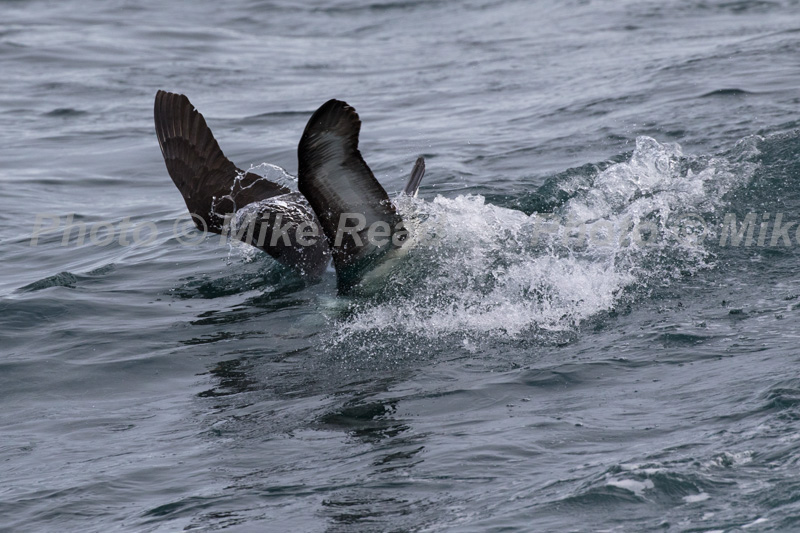
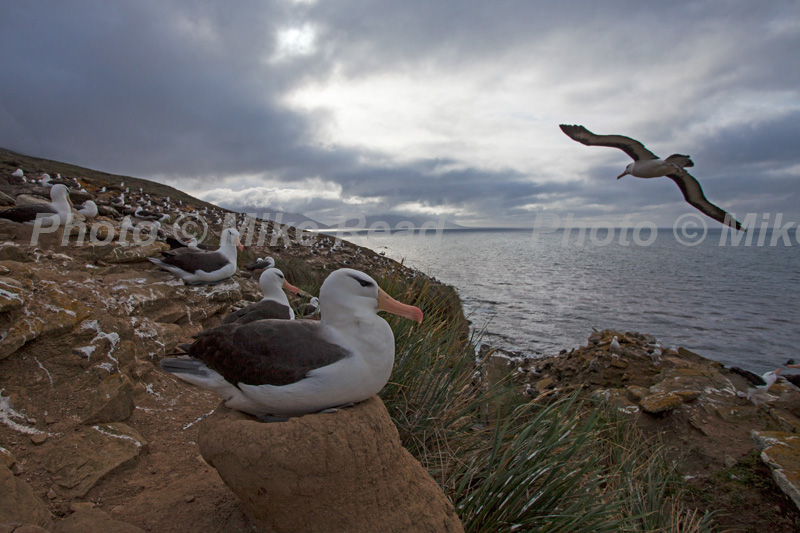
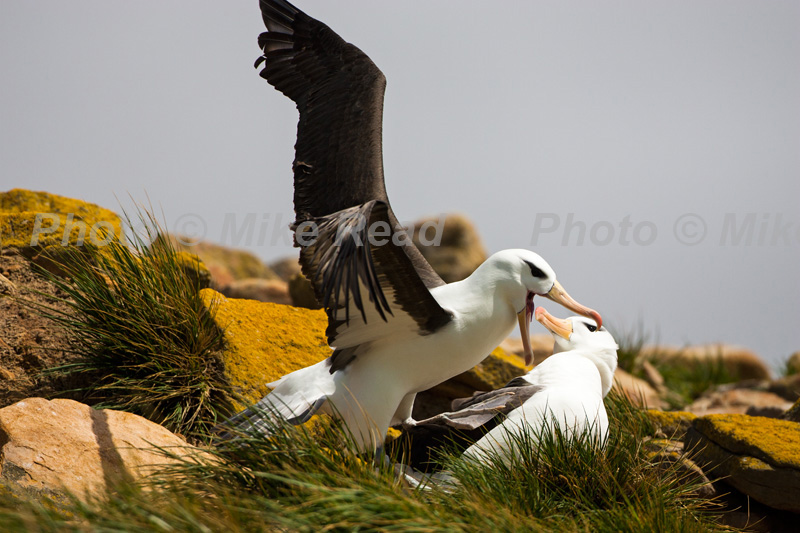
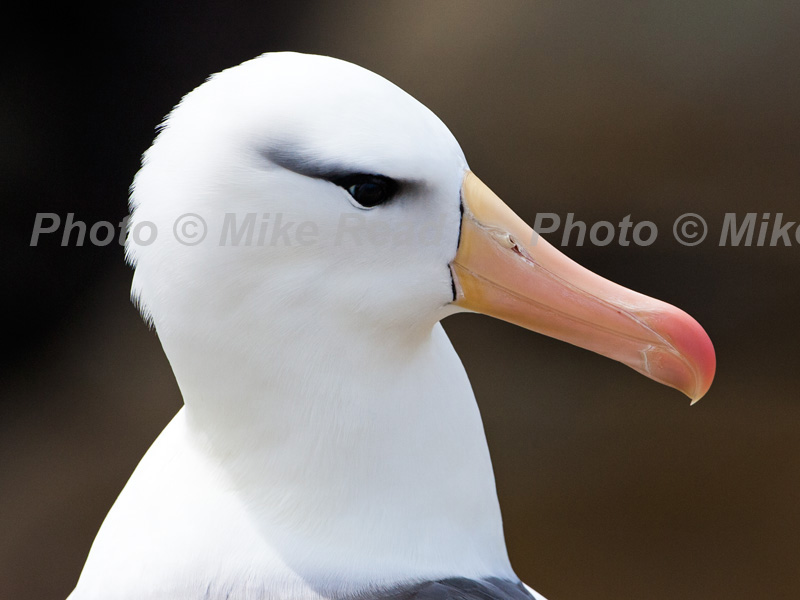
In my opinion, Albatrosses are some of the most masterful fliers  Unlike raptors which often rely on thermals to give them effortless flight, albatrosses use the up draught of wind rising over the waves of the Southern oceans.  The picture to the left shows a bird that has just landed beside its nesting mate.  To the right is a small part of the colony on Saunders Island.  Below left to right shows a closeup of a breeding bird, A bird landing on the sea and diving for food is next then we have a view with the nearest nesting bird looking like it went to the Pisa school of architecture when it designed its nest!
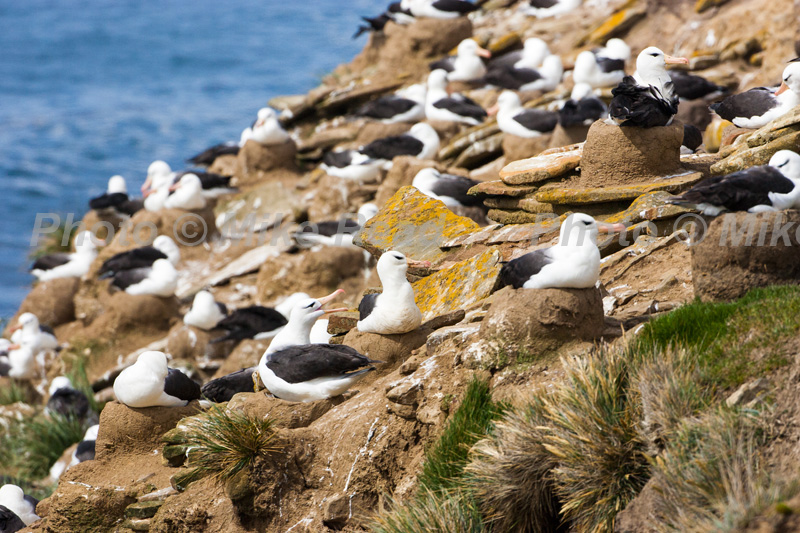
Black-browed albatross Thalassarche melanophrys part of a huge nesting colony Saunders Island Falkland Islands
02AD7887-Black-browed-albatross-colony
Black-browed albatrossThalassarche melanophrys head close-up Saunders Island Falkland Islands
02AD7917-Black-browed-albatross-head-close-up
Black-browed albatross Thalassarche melanophrys landing on the sea and feeding near Kidney Island Falkland Islands British Overseas Territory UK December 2016
03AD0677-Black-browed-albatross-with-head-under-water
Black-browed albatross Thalassarche melanophrys nesting colony and one in flight Saunders Island Falkland Islands British Overseas Territory UK November 2016
03AD0607-Black-browed-albatross-nesting-colony
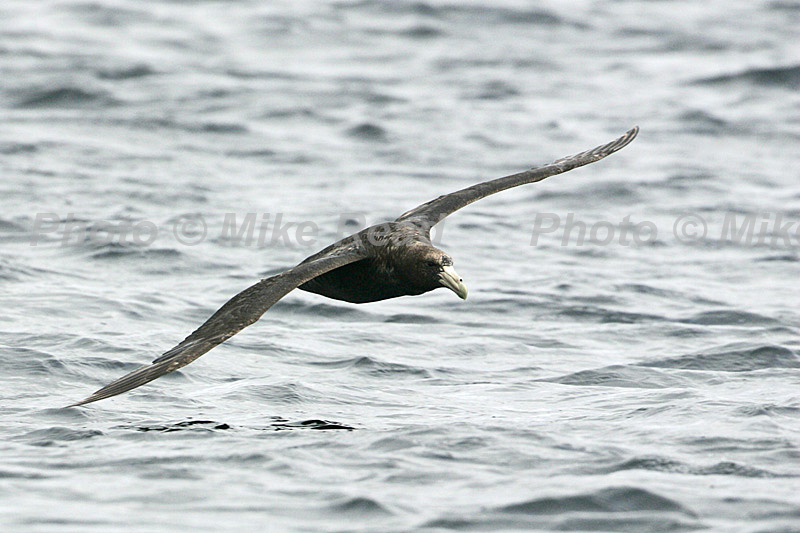
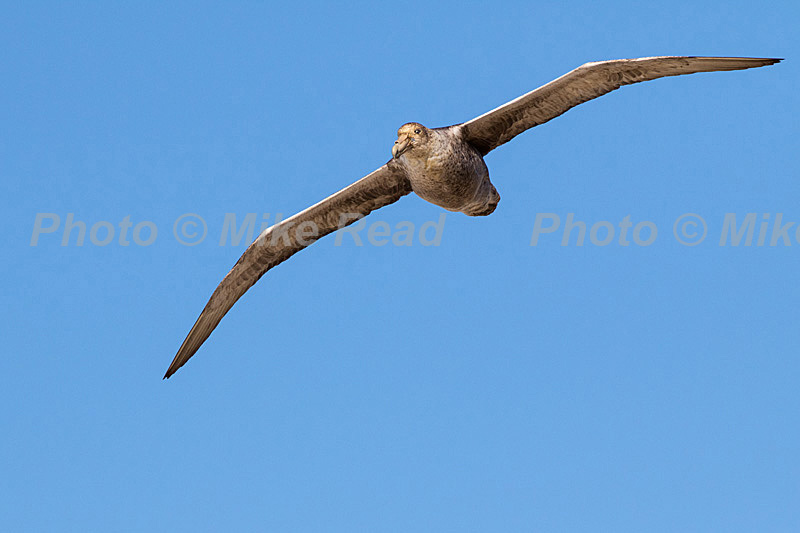
Southern giant petrel Macronectes giganteus in flight over the sea Falkland Islands
02AD3207-Southern-giant-petrel-in-low-flight

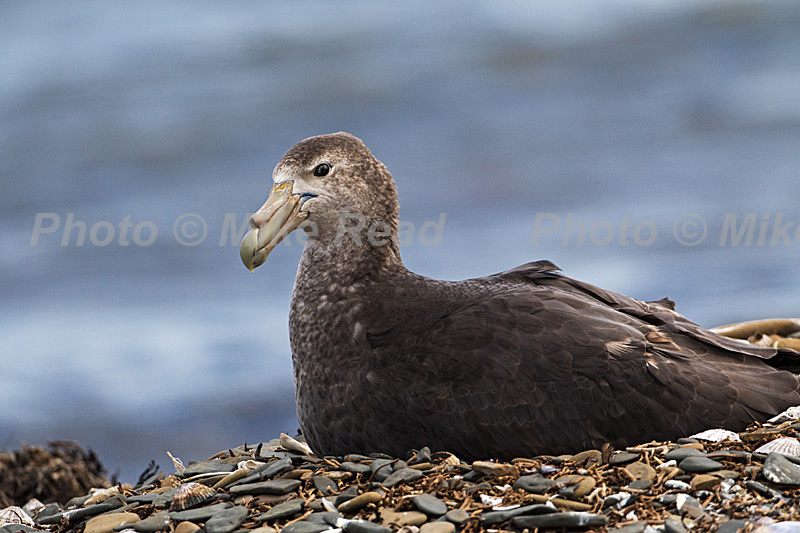
Giant petrels are also good fliers that rely on wind currents for lift and also like the albatrosses, they can travel may, many miles without a single flap of their long, narrow wings.  The three pictures below shows a nesting colony on Sealion Island but please don't venture too close as these birds can be somewhat nervous compared to other Falkland species.  If they leave their nest due to human disturbance, they may well desert their eggs or young.  A closer approach is sometimes possible by photographing from within a vehicle as was the case with the middle image below.  It was taken on a different island.  The plumage of the giant petrels vary quite considerably as can be seen in the two flying birds (left and below).  This just might be due to age; perhaps older birds are paler just like peoples' hair in old age!
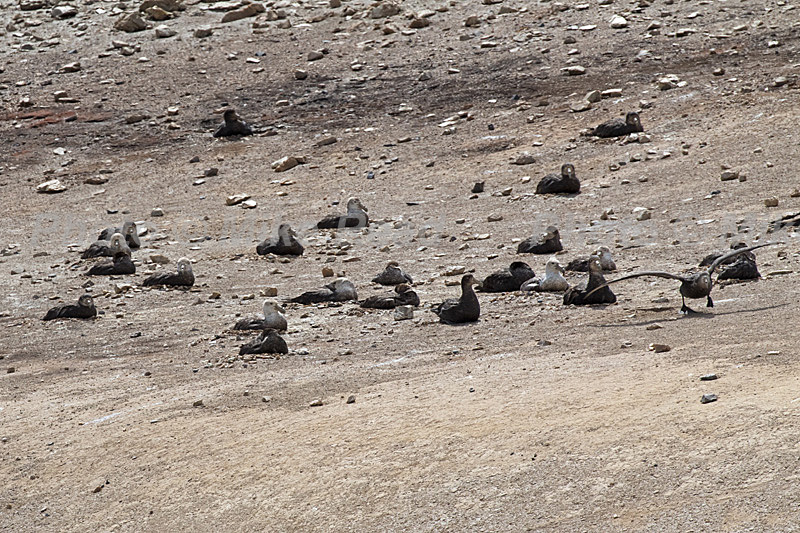
Southern giant petrel Macronectes giganteus group at nesting colony.. Pebble Island. Falkland Islands. British Overseas Territory, UK
03AD1261-Southern-giant-petrel-nesting-colony
Southern giant petrel Macronectes giganteus on the nest Bleaker Island Falkland Islands November 2015
02AD9404-Southern-giant-petrel-on-nest
Southern giant petrel Macronectes giganteus in flight off Pebble Island, Falkland Islands, British Overseas Territory, UK
03AD1220-Southern-giant-petrel-in-flight
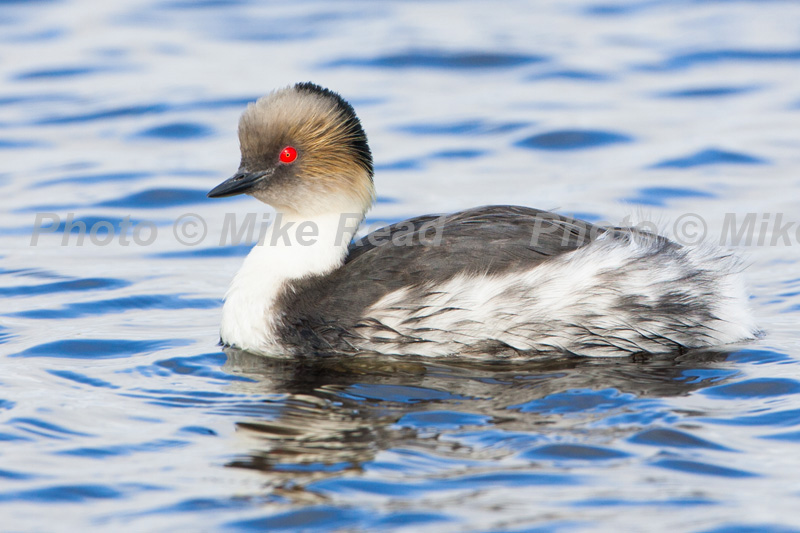
Silvery grebe Podiceps occipitalis swimming on a pond Sea Lion Island Falkland Islands
02AD8351-Silvery-grebe

The two types of grebe that I have seen on the Falklands are Silvery grebe and White tufted grebe.  They can be found on larger ponds on some of the islands.  Look at the bright red eye of the Silvery grebe; really quite extraordinary.  The White-tufted grebe (right) shows an adult feeding a small youngster which is riding among the feathers on its parent's back where it is trying to stay warm and dry until the other parent arrives with more food.
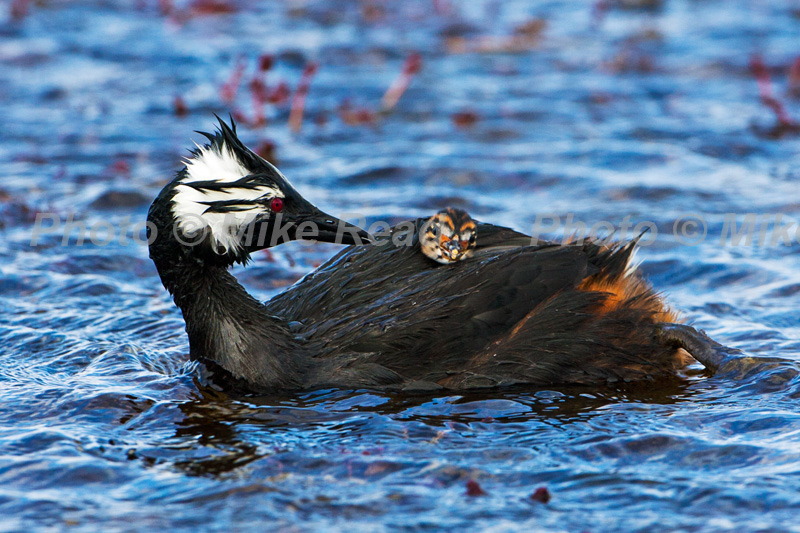
White-tufted grebe Rollandia rolland rolland adult feeding chick on pond near Gypsy Cove East Falkland Falkland Islands
02AD8356-White-tufted-grebe-with-chick-on-back

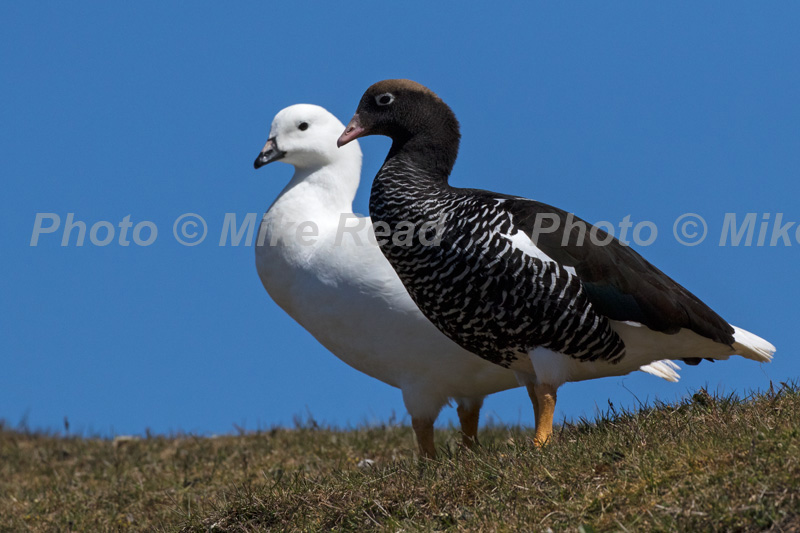
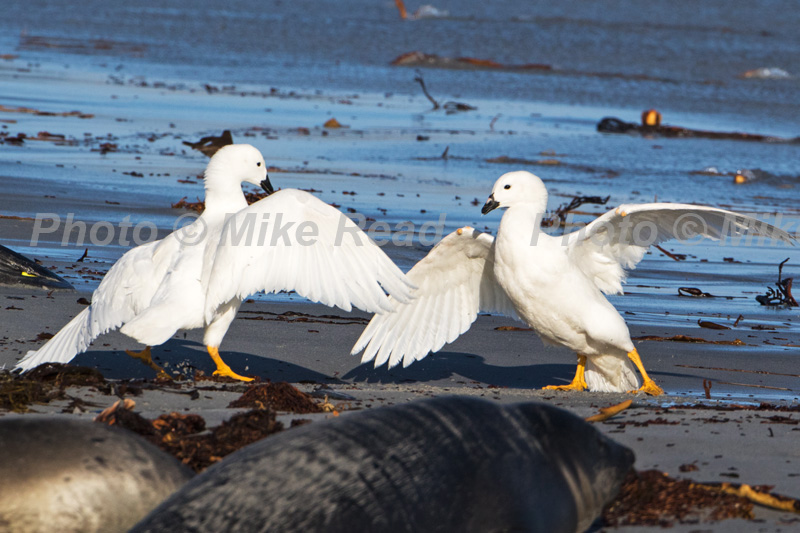
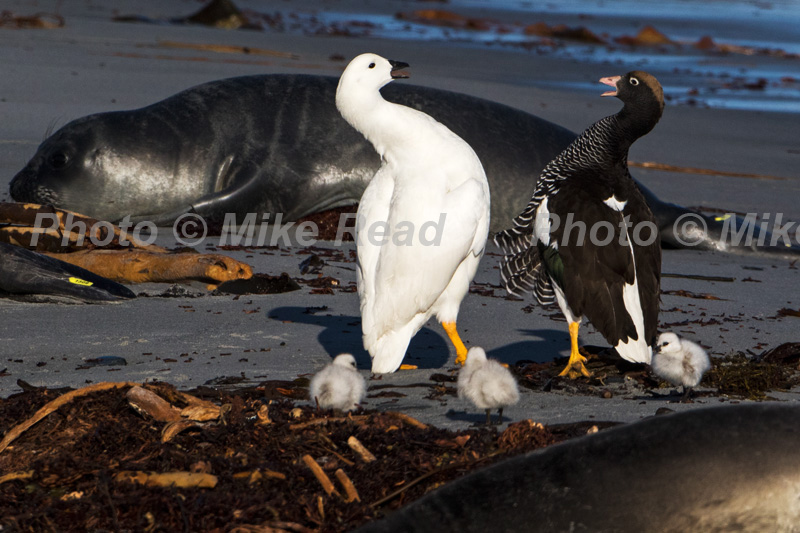
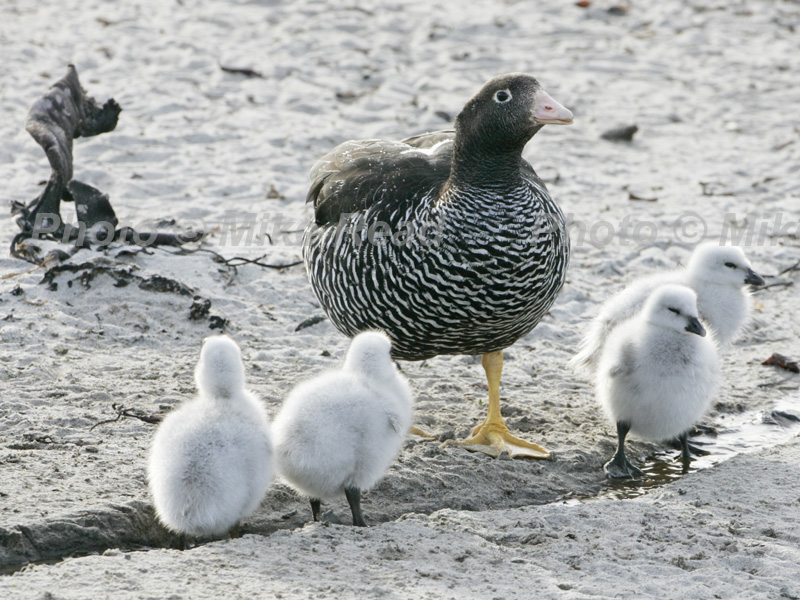
There are three species of geese to be seen in the Falkland Islands and these are Ruddy-headed Goose, Upland Goose and Kelp Goose.  Each of these are shown below starting with the latter which shows the largest difference between the all-white male and the dark female.  The top row of Kelp Geese images shows a pair feeding on kelp which, I presume, is how they got their name; a female taking her brood of four goslings to a freshwater trickle to drink and a pair with a clear blue sky beyond them.  Below that on the left is a battle between two males where one had ventured into the territory of a pair with goslings and on the right is the victory display when the intruder had been driven away.
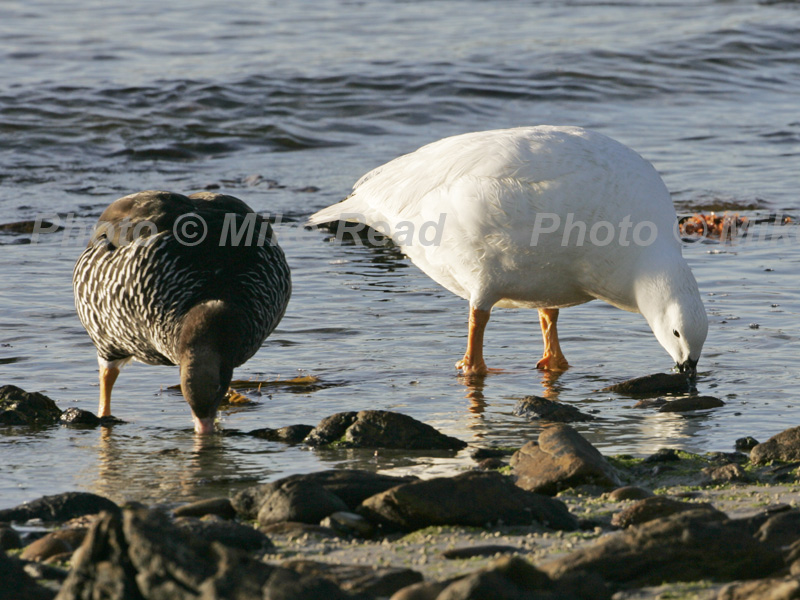
Kelp goose Chloephaga hybrida male with female feeding at the edge of the tide Falkland Islands
02AD2790-Kelp-goose-pair-feeding
Kelp goose Chloephaga hybrida female bringing four goslings to small freshwater stream to drink Falkland Islands
02AD2819-Kelp-goose-female-and-goslings
Kelp goose Chloephaga hybrida malvinarum pair on grassland Saunders Island Falkland Islands British Overseas Territory UK
03AD0818-Kelp-goose-pair
Kelp goose Chloephaga hybrida malvinarum rival males in territorial dispute amongst Southern elephant seals Mirounga leonina Sea Lion Island Falkland Islands November 2015
02AD9488-Kelp-goose-two-males-fighting
Kelp goose Chloephaga hybrida malvinarum pair in bonding display after battle with intruding male Sea Lion Island Falkland Islands November 2015
02AD9491-Kelp-goose-pair-displaying

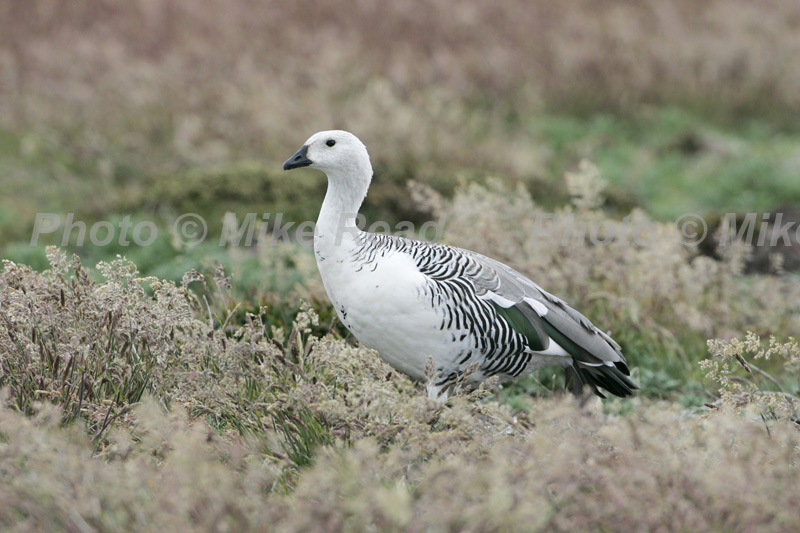
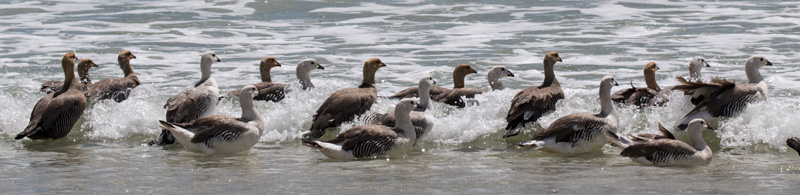
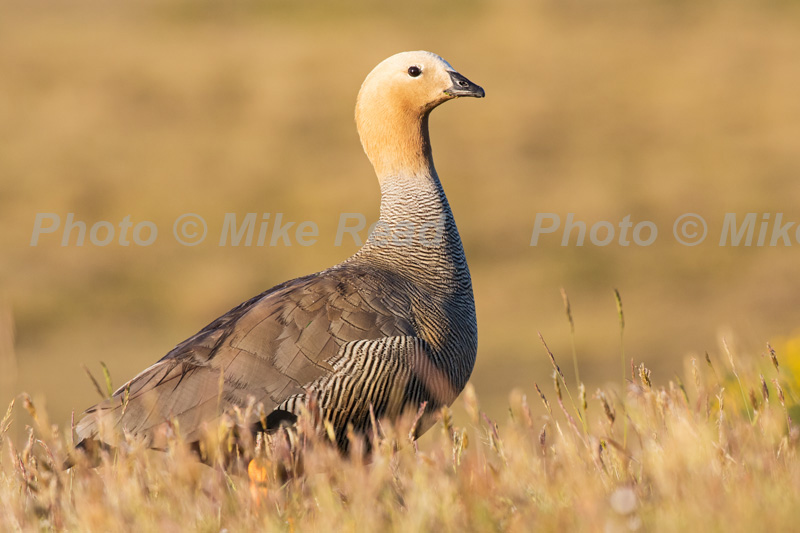
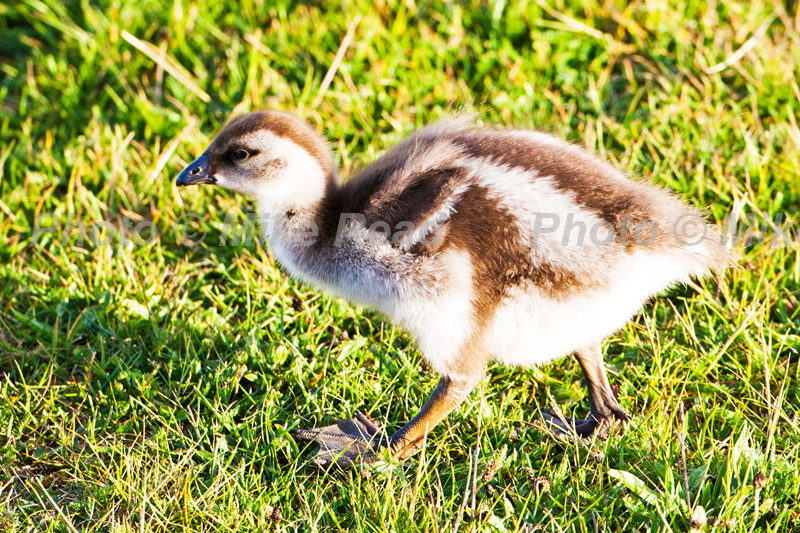
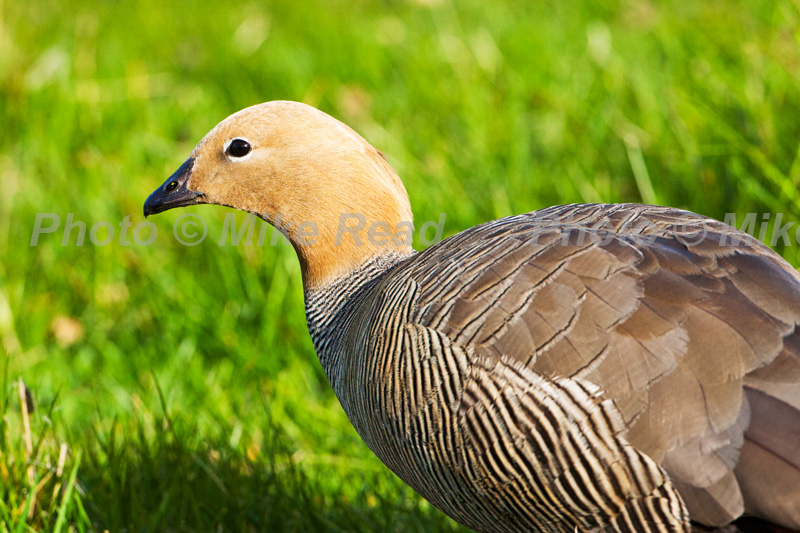
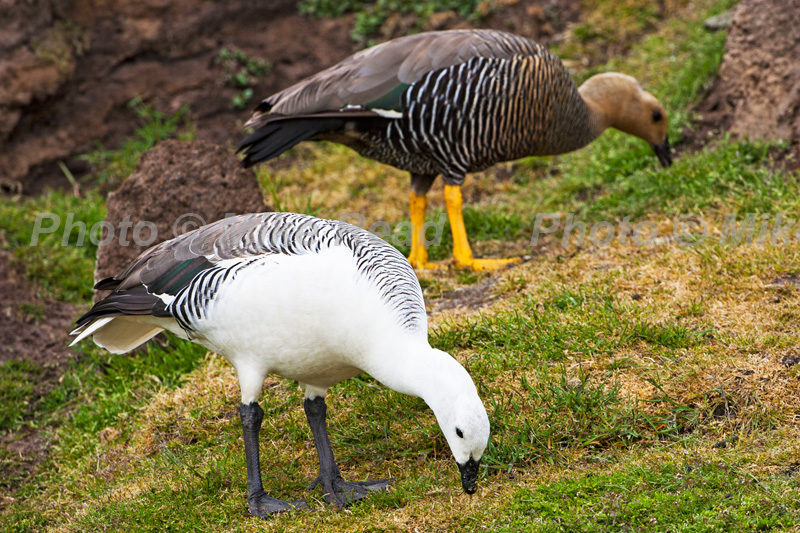
  The broad image Next we see pictures of Upland geese.  Again thee is a huge difference between the sexes with the male showing lots of white while the female looks superficially like a Ruddy-headed goose.  The left hand image shows a female being protective of her five young (count the legs!).  the central picture has a feeding pair and to the right of that is the portrait of a male.  The image below that shows a group of Upland geese walking into the sea just as a small  wave crashed on to the shore.  The final row of geese images shows Ruddy-headed geese.  The sexes are somewhat similar but the male's plumage is a little brighter than the females and the barring on their sides is considerably finer than that on the sides of a female Upland goose and the goslings of these two species are very different.
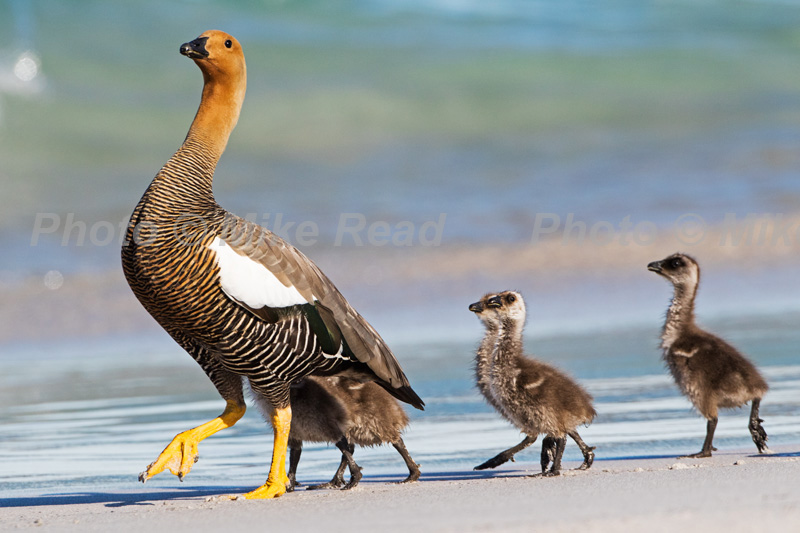
Upland goose Chloephaga picta leucoptera female and goslings walking along a beach Bleaker Island Falkland Islands November 2015
02AD9515-Upland-goose-female-and-young
Upland goose Chloephaga picta leucoptera pair feeding on grassland Saunders Island Falkland Islands
02AD8547-Upland-goose-pair-feeding
Upland goose Chloephaga picta male in grassland Falkland Islands
02AD2854-Upland-goose-male
Upland goose Chloephaga picta leucoptera flock rushing into the sea Pebble Island Falkland Islands British Overseas Territory UK
03AD0865-Upland-goose-group-at-edge-of-sea
Ruddy-headed goose Chloephaga rubidiceps on grassland Darwin Falkland Island British Overseas Territory UK
03AD0842-Ruddy-headed-goose
Ruddy-headed goose Chloephaga rubidiceps gosling on grassland Darwin East Falkland Falkland Islands
02AD8540-Ruddy-headed-goose-gosling
Ruddy-headed goose Chloephaga rubidiceps adult on grassland Darwin East Falkland Falkland Islands
02AD8535-Ruddy-headed-goose-close-up